
ATR Chassis Selection Guide for Rugged Defense Electronics
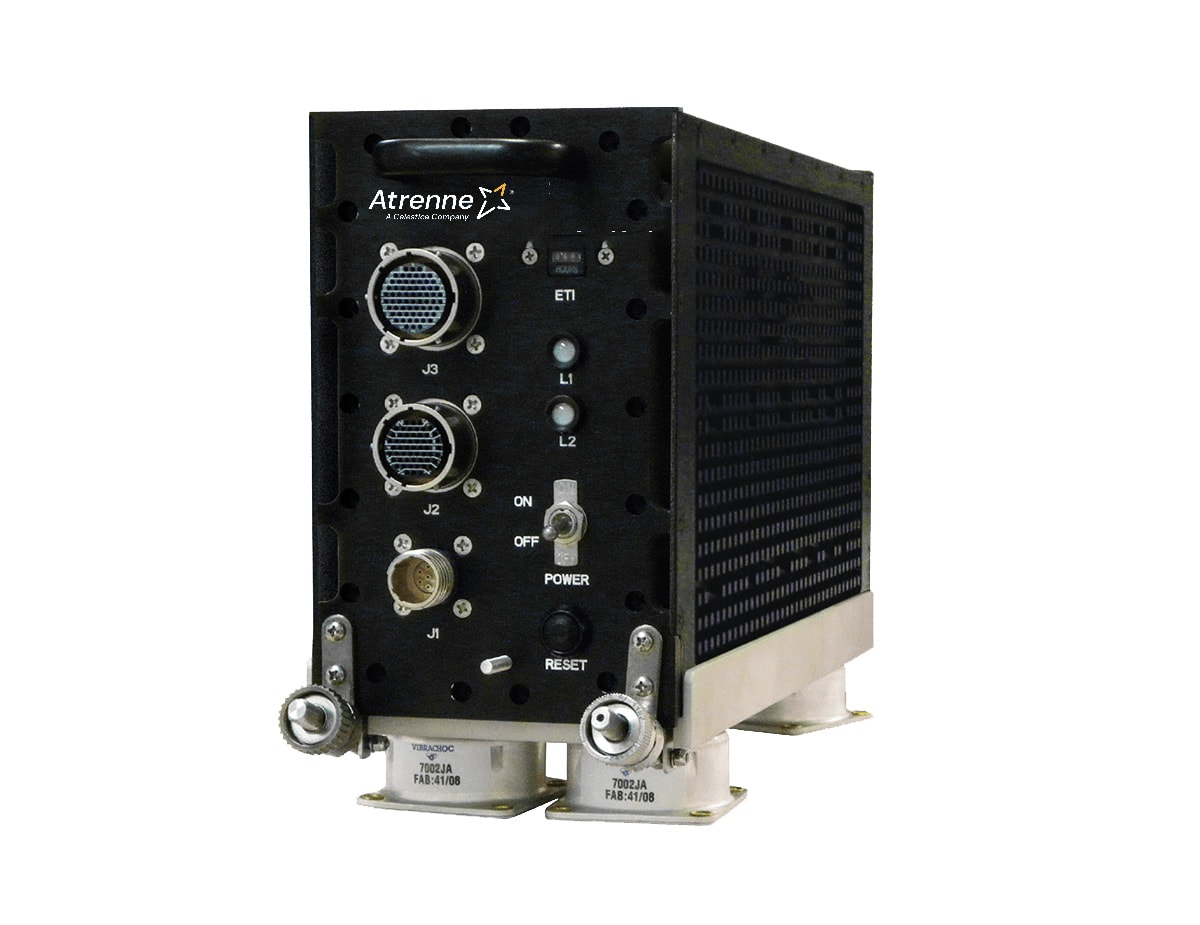
For defense and aerospace programs, an electronics chassis is more than a protective enclosure. It is the mechanical, thermal, and electrical foundation that helps mission-critical systems perform reliably in demanding environments.
Air Transport Rack, or ATR, chassis are widely used in rugged embedded systems because they provide a proven format for packaging sensitive electronics in airborne, ground, naval, unmanned, ISR, communications, and ELINT applications. But choosing the right ATR chassis requires more than selecting a standard size. Program teams must evaluate form factor, cooling, backplane architecture, power, environmental requirements, and long-term upgrade needs.
Here are the key factors to consider when specifying an ATR chassis for rugged defense electronics.
What Is an ATR Chassis?
An ATR chassis is a rugged enclosure designed to house and protect electronic systems in harsh operating environments. These chassis are commonly used in military and aerospace platforms where electronics must withstand shock, vibration, temperature extremes, EMI/RFI concerns, and SWaP constraints.
ATR chassis are available in standard and fractional sizes, including 1/4 ATR, 1/2 ATR, 3/4 ATR, 1 ATR, and larger extended configurations. This range allows system designers to match the chassis to available platform space, required payload capacity, cooling needs, and power requirements.
1. Start With the Mission Environment
The operating environment should guide the chassis selection process from the beginning. A system installed in an aircraft may face different constraints than one deployed on a ground vehicle, shipboard platform, or unmanned system.
Key environmental and platform factors include:
- Operating temperature range
- Shock and vibration exposure
- Altitude and pressure conditions
- EMI/RFI shielding requirements
- Sand, dust, humidity, or salt fog exposure
- Available airflow
- Mounting and installation constraints
- Size, weight, and power limits
Understanding these requirements early helps reduce redesign risk and ensures the chassis can support both qualification and deployment.
2. Match the ATR Size to the System Architecture
ATR form factor selection should be based on more than physical space. The chassis must also support the required number of slots, payload modules, power supplies, I/O connections, and thermal capacity.
A compact system may only require a 1/4 ATR or 1/2 ATR chassis. More complex applications, such as sensor processing, mission computing, or ELINT systems, may require a 3/4 ATR, 1 ATR, or larger configuration.
Atrenne supports ATR chassis solutions across a range of embedded computing architectures, including OpenVPX, VPX, VME, VXS, CompactPCI, and SOSA-aligned systems. This flexibility is especially valuable for programs that need to support both legacy architectures and modern open standards.
3. Consider OpenVPX and SOSA Requirements
Many defense programs are moving toward Modular Open Systems Approach (MOSA) to improve interoperability, reduce vendor lock-in, and simplify future technology refreshes. OpenVPX and SOSA-aligned systems are central to this shift.
When selecting an ATR chassis, teams should evaluate whether the enclosure can support the required payload profiles, backplane topology, slot count, data rates, power distribution, and cooling method. The chassis, backplane, power supply, I/O panel, and payload modules must work together as a complete system.
This is particularly important for high-throughput applications where performance, modularity, and reliability all matter.
4. Choose the Right Cooling Strategy
Thermal management is one of the most important considerations in ATR chassis design. As embedded systems become more powerful, they generate more heat in smaller spaces. The chassis must help move that heat away from critical electronics.
Common cooling approaches include:
Forced air cooling for systems where airflow is available and appropriate.
Conduction cooling for rugged applications where heat is transferred from the electronics to the chassis structure.
Air-over-conduction cooling for systems that combine conduction-cooled modules with airflow across heat-dissipating surfaces.
Liquid cooling for high-power systems that require greater thermal capacity.
The right cooling method depends on the platform, power density, environmental exposure, and reliability requirements.
5. Evaluate Backplane and I/O Needs Early
The backplane is a critical part of the system architecture. It enables communication between boards, distributes power, and supports the overall performance of the embedded system.
For ATR-based systems, backplane planning should include:
- Architecture requirements such as OpenVPX, VPX, VME, or CompactPCI
- Slot count and pitch
- Signal integrity and data rate needs
- Power distribution
- Rear transition module (RTM) or I/O panel requirements
- RF, optical, or high-speed interconnect needs
- Future expansion or upgrade requirements
Because Atrenne provides both chassis and backplane solutions, teams can address mechanical, electrical, thermal, and integration considerations together.
6. Decide Between Standard, Modified, and Custom Solutions
Some programs can use a standard or configurable ATR chassis to reduce development time and risk. Others require a modified or fully custom design due to unique platform constraints, advanced cooling requirements, specialized I/O, or mission-specific payload integration.
A standard ATR chassis may be the right fit when requirements align closely with available configurations. A modified chassis may be appropriate when teams need changes to cooling, mounting, I/O, power, or backplane design. A custom chassis may be required for highly specialized defense applications where performance, packaging, and environmental demands are tightly linked.
Atrenne’s custom engineering capabilities help support programs that need more than an off-the-shelf enclosure.
Why Work With Atrenne?
Atrenne brings together expertise in rugged chassis enclosures, backplanes, system integration, thermal management, and custom engineering. This system-level perspective is important because ATR chassis selection affects far more than mechanical packaging. It influences cooling performance, signal integrity, power distribution, maintainability, and long-term system readiness.
Whether a program requires a standard ATR enclosure, a configurable development chassis, or a custom rugged solution, Atrenne can help support the path from concept through deployment.