
Backplane Modernization for Legacy Defense Systems: Bridging VME, VPX, OpenVPX, and SOSA-Aligned Architectures
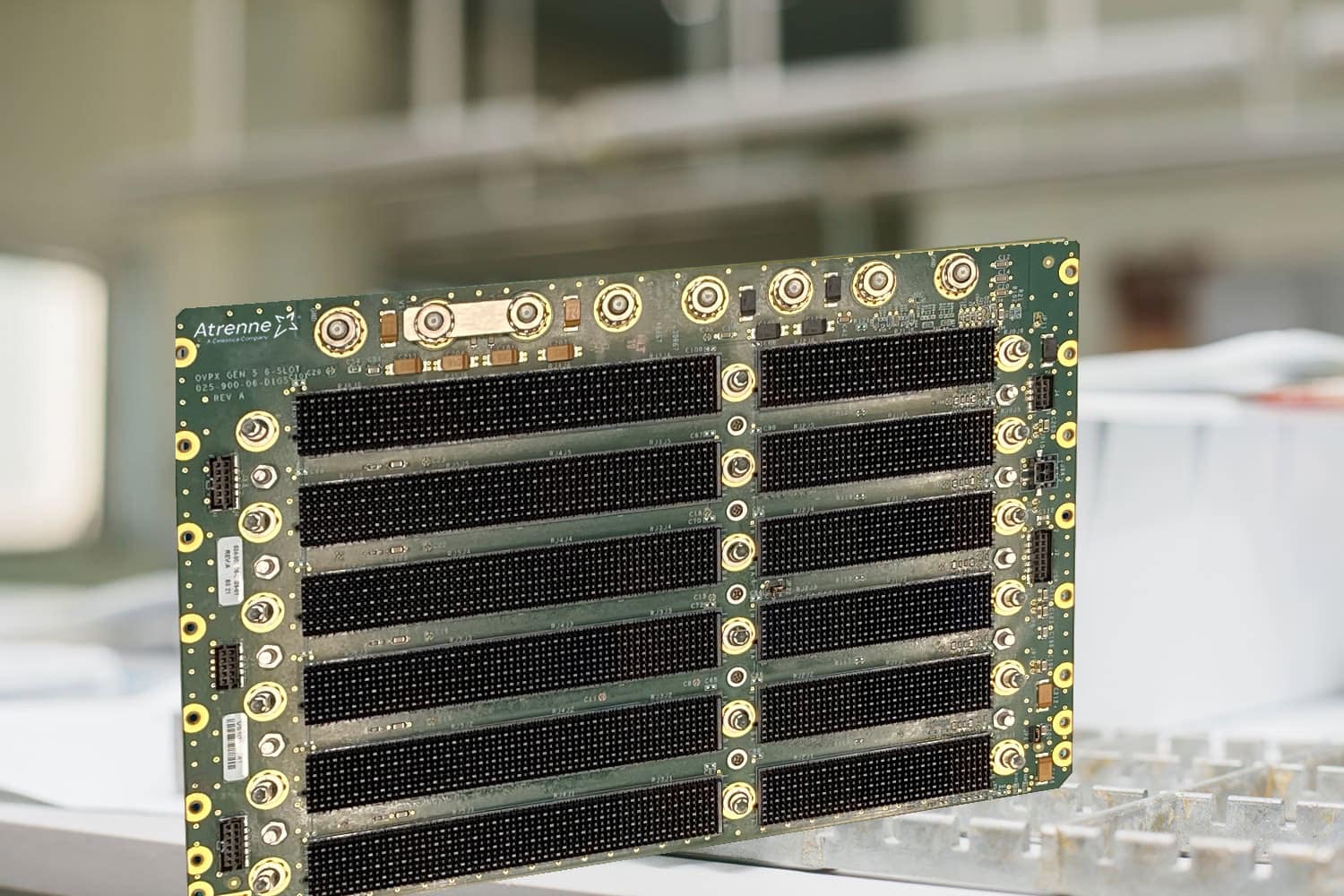
Modern defense platforms are expected to process more data, support faster communications, integrate new payloads, and remain adaptable as mission requirements evolve. But many defense and aerospace systems still rely on legacy electronic architectures that were designed before today’s high-speed data, interoperability, and modular open systems requirements became standard.
For defense programs, modernization is rarely as simple as replacing an entire system. Existing platforms often have proven performance records, long qualification histories, and complex integration requirements. In many cases, the goal is not to start over. The goal is to extend the life of a trusted system while introducing new capabilities in a controlled and reliable way.
That is where the backplane plays a critical role.
As the interconnect foundation of a rugged embedded system, the backplane determines how boards, modules, power, I/O, and high-speed data fabrics work together. For legacy defense systems, backplane modernization can provide a practical path from older architectures such as VME and CompactPCI toward newer VPX, OpenVPX, , and SOSA-aligned designs.
Why Legacy Defense Systems Still Matter
Many deployed defense and aerospace systems continue to rely on legacy architectures because they are tested and proven technologies. These systems have been validated in demanding environments, integrated into platform-level designs, and supported through long program lifecycles.
However, mission demands continue to evolve. Modern systems often require greater processing power, higher-speed data transfer, improved sensor integration, enhanced networking, more flexible upgrade paths and reduced size and weight. A platform originally built around VME, for example, may still perform reliably but lack the bandwidth or open architecture flexibility needed for newer mission requirements.
Backplane modernization helps bridge that gap by allowing programs to evaluate what should be preserved, what should be upgraded, and how legacy and modern technologies can coexist within a ruggedized system architecture.
The Backplane as the Modernization Pathway
The backplane is often one of the most important elements in a modernization strategy because it defines the physical and electrical relationships between system components. It supports communication between plug-in cards (PIC), distributes power, enables I/O connectivity, and helps determine how the system can scale or adapt over time.
In a rugged defense system, the backplane must also support the realities of deployment, including shock, vibration, thermal stress, space constraints, power limitations, signal integrity requirements, and long-term reliability expectations.
When modernizing a legacy system, the backplane can help answer several critical questions: Can existing cards be retained? Can newer VPX or OpenVPX payloads be introduced? Is a hybrid backplane required? Does the system need Ethernet, PCIe, or other high-speed fabrics? Is SOSA alignment required for future interoperability?
Because the backplane touches so many areas of the system, it is not simply a component selection decision. It is a system architecture decision.
From VME to VPX: Why Migration Is Not Always One Step
VME has been widely used across defense and aerospace applications for decades. Its longevity reflects its reliability, maturity, and effectiveness in mission-critical environments. But as processing and data throughput requirements increase, many programs are evaluating how to migrate from VME-based architectures to VPX or OpenVPX-based systems.
That migration does not always happen in one step. Some programs may need to retain existing VME cards while introducing newer VPX modules. Others may require a hybrid architecture that supports both legacy and modern elements. In some cases, a full technology refresh may be possible. In others, phased modernization is the better path because it reduces disruption and allows critical system functions to remain intact.
A thoughtful backplane strategy can support these different migration paths. Hybrid backplanes, custom slot configurations, updated power distribution, and carefully engineered fabric topologies can help programs introduce new capabilities while preserving existing investments.
Where VPX, OpenVPX, and SOSA-Aligned Architectures Fit
VPX, OpenVPX, and SOSA-aligned architectures are often discussed together, but they do not mean the same thing.
VPX provides a high-performance embedded computing architecture for rugged, high-speed systems. OpenVPX builds on VPX by defining standardized profiles and approaches that improve interoperability across modules, backplanes, and systems. SOSA-aligned architectures support modular open systems objectives for sensor-based defense applications.
For modernization programs, these architectures can help support faster data movement, higher-density processing, improved interoperability, reduced vendor lock-in, and more flexible upgrade paths. However, standards alone do not guarantee success. A VPX or OpenVPX backplane must still be designed around the specific mission profile, slot requirements, module set, fabrics, cooling strategy, power needs, and mechanical constraints of the system.
Modernization Without a Full System Replacement
One of the most important advantages of backplane modernization is flexibility. Instead of forcing a complete system replacement, a carefully designed backplane strategy can allow teams to modernize selectively.
This can help programs extend the life of existing platforms, preserve qualified system elements, introduce new processing or networking capability, reduce redesign risk, support phased technology refresh, and move toward open architecture requirements.
For long-life defense and aerospace systems, this approach can be especially valuable. It allows programs to evolve proven platforms without unnecessary disruption.
How Atrenne Supports Backplane Modernization
Atrenne supports rugged backplane solutions for defense and aerospace systems, including VME64x, CompactPCI, VPX, OpenVPX, SOSA-aligned, 3U, 6U, and hybrid configurations. These capabilities allow Atrenne to support both legacy system sustainment and modern open architecture requirements.
Atrenne’s experience across rugged chassis, backplanes, enclosures, and integrated systems provides a system-level perspective that is essential for modernization programs. Backplane design cannot be separated from the chassis, cooling strategy, power architecture, module set, and deployment environment. By considering these factors together, Atrenne helps customers develop solutions engineered for real-world mission demands.
Whether a program requires a legacy backplane replacement, a hybrid VME-to-VPX migration path, an OpenVPX architecture, or a SOSA-aligned design, Atrenne can support the engineering and manufacturing requirements needed for rugged defense applications.
Building a Bridge Between Proven Systems and Future Requirements
Legacy defense systems continue to play an important role in mission-critical operations. But as requirements evolve, these systems often need a path toward greater performance, interoperability, and upgradeability.
Backplane modernization provides that path.
By bridging legacy architectures such as VME and CompactPCI with newer VPX, OpenVPX, Ethernet, and SOSA-aligned designs, defense programs can extend platform life while introducing the capabilities needed for modern missions.
The right backplane strategy makes modernization more practical, more controlled, and more aligned with long-term program goals. For rugged defense and aerospace systems, it can be the difference between replacing a proven platform and evolving it for the future.
Modernizing a legacy defense platform? Explore Atrenne’s rugged backplane solutions or contact our team to discuss VME, VPX, OpenVPX, SOSA-aligned, and hybrid backplane options for your next program.