
OpenVPX Chassis Design: What Engineers Should Consider
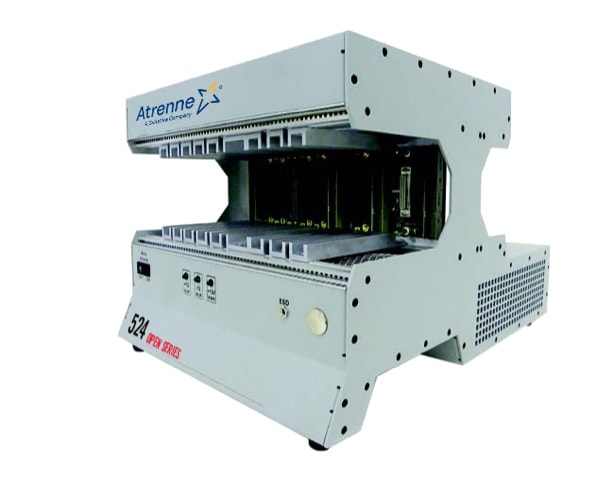
OpenVPX has become a key architecture for rugged embedded computing systems used in defense, aerospace, C5ISR, radar, EINT, and other high-performance applications. While much of the attention often goes to payload cards, processors, switches, and backplanes, the chassis plays an equally important role in overall system performance.
An OpenVPX chassis is not simply an enclosure. It is the physical, thermal, electrical, and mechanical foundation that helps the system operate reliably in demanding environments. For engineers designing or integrating OpenVPX-based systems, chassis decisions should be made early and in close coordination with backplane, power, cooling, and module requirements.
Begin with the Deployment Environment
The first question is not how many slots the chassis needs. It is where the system will operate.
A lab development system, ground vehicle computer, aircraft-mounted electronics package, and shipboard enclosure may all use OpenVPX technology, but each one has different mechanical and environmental requirements. Engineers need to evaluate temperature range, altitude, shock, vibration, EMI/EMC expectations, available airflow, maintenance access, and mounting constraints before finalizing the chassis architecture.
For rugged military and aerospace applications, these factors can shape nearly every design choice, from enclosure materials and sealing to connector selection and cooling method.
Define the Mechanical Envelope Early
Size, weight, and power requirements are central to most defense and aerospace electronics programs. Engineers should determine whether the system needs to fit within an ATR envelope, rackmount format, small-form-factor enclosure, or custom mechanical footprint.
The chassis envelope affects card spacing, connector access, airflow paths, power supply placement, cable routing, front-panel I/O, rear transition module access, and future expansion options. A compact enclosure may solve a SWaP challenge, but it can also increase thermal density and make serviceability more difficult.
This is why chassis design should not be isolated from the rest of the system. Mechanical packaging, electrical architecture, and thermal strategy need to be developed together.
Select the Right Cooling Approach
Cooling is one of the most important chassis-level decisions in an OpenVPX system. Engineers should evaluate the thermal load of each module, total system power, airflow availability, environmental sealing requirements, and the platform’s ability to remove heat.
Some systems may be well served by forced-air cooling, especially in development or controlled environments. Others may require conduction cooling for rugged airborne or ground mobile applications. Higher-density systems may benefit from liquid cooling when heat loads exceed what air or conduction approaches can efficiently manage.
The cooling strategy also affects other areas of the design. It can influence module selection, chassis sealing, fan access, heat frame design, weight, acoustic limits, maintenance procedures, and long-term reliability.
Coordinate the Chassis and Backplane
The chassis and backplane should be treated as an integrated design. The backplane determines slot count, module compatibility, data movement, I/O routing, and expansion potential. The chassis must support that backplane mechanically, thermally, and electrically.
Engineers should consider whether the system requires 3U, 6U, or hybrid support; whether RF or optical interfaces are needed; and how the chassis will accommodate front or rear I/O. For programs pursuing SOSA-aligned architectures, the relationship between chassis, backplane, and payload modules becomes even more important.
A well-planned chassis can help simplify integration by supporting the right slot profiles, cooling method, power architecture, connector layout, and access points from the start.
Plan for Power and I/O Integration
Power distribution and I/O are often where chassis design becomes highly application-specific. Engineers should account for input voltage, power supply redundancy, current sharing, filtering, power conversion, and how power will be delivered to each slot.
I/O planning is equally important. Rugged connectors, RF cabling, optical interfaces, signal conditioning, and front-panel layout can all affect integration complexity. In deployed systems, I/O must also be designed for reliability, accessibility, and environmental exposure.
By planning power and I/O early, teams can reduce late-stage redesigns and avoid packaging compromises that may affect performance or serviceability.
Design for Access, Test, and Sustainment
A successful OpenVPX chassis must support more than initial deployment. Engineers should also consider how the system will be assembled, tested, maintained, and upgraded over time.
Development chassis may require open access to cards under test, probe access, and flexible airflow. Deployed systems may require ruggedized access panels, replaceable fans, durable connectors, and simplified maintenance procedures.
Lifecycle planning is especially important for defense programs, where systems may need to support technology refreshes, replacement modules, or evolving mission payloads over many years. A chassis designed with sustainment in mind can help extend system value while reducing integration risk during future upgrades.
Atrenne OpenVPX Solutions
OpenVPX chassis design is a system-level decision. Engineers must consider the deployment environment, mechanical footprint, cooling approach, backplane integration, power architecture, I/O strategy, maintainability, and long-term scalability.
By addressing these factors early, teams can create OpenVPX systems that are rugged, serviceable, thermally efficient, and ready for mission-critical performance.
Atrenne supports rugged OpenVPX and SOSA-aligned chassis, backplanes, development systems, and custom enclosures for advanced defense and aerospace electronics. To discuss your next OpenVPX chassis requirement, connect with Atrenne’s engineering team and explore a solution designed around your platform, payload, and mission needs.